
We often hear the call to care for the vulnerable. But what does that look like when it costs us everything?
This film explores a community that answered that call and shows what happens when faith moves from words to action.
A Town’s Unlikely Answer
“Sound of Hope: The Story of Possum Trot” is set in the small, rural community of Possum Trot, Texas, in 1996. The story centers on Donna Martin and her husband, Reverend W.C. Martin, who leads the local Bennett Chapel Missionary Baptist Church.
They are a loving couple with two children of their own, including a son with a developmental disability, and they face constant financial pressures. Their days are a balance of church duties, family care, and struggling to make ends meet in their tight-knit but financially strained town.
The sudden death of her mother, the community’s matriarch, upends Donna’s life. While lost in grief, she feels a clear and undeniable call from God. This conviction arrives with a force she cannot ignore, compelling her to act on a feeling that seems to come from outside herself.
Check out: Miracles From Heaven Movie Review
She tells her husband she wants to adopt children from the foster care system. He initially meets the suggestion with skepticism and questions if they can handle more responsibility.
Undeterred, Donna and her sister, Diann, connect with Susan Ramsey, a weary but dedicated social worker. Susan is familiar with the harsh realities of the system and the children often deemed “hard-to-place.”
Susan has seen firsthand how the system fails vulnerable children, which leaves her overworked and nearly hopeless about their prospects for finding stable homes. Diann is the first to act, adopting two children. Soon after, Donna and W.C. follow, welcoming three children into their home.
Among them is Terri, a teenager with serious wounds from past abuse. Her trauma manifests in severe behavioral issues, including pretending to be a cat. Her story becomes a central focus and illustrates the challenges of loving a child who has never known safety.
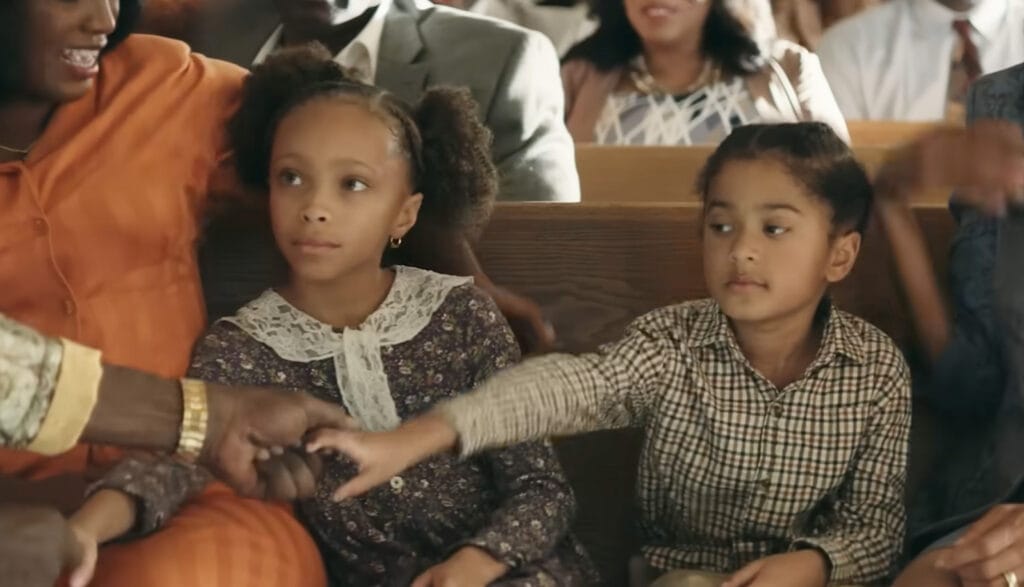
Inspired by the Martins’ example, a movement begins within their small church. Reverend Martin preaches a powerful message and urges his congregation to open their homes to the children nobody else wants.
His sermon directly confronts the congregation’s comfort and frames adoption not as a suggestion but as a moral imperative for their community. The response is extraordinary. Twenty-two families from Bennett Chapel step forward to adopt.
Don't Miss: October Baby Movie Review
The film documents the messy and difficult process as these families welcome children with complex needs into their lives. They face backed-up sewer systems, strained finances, and the daily struggles of parenting children with troubled pasts. The community bands together to support one another through these trials.
By the end, this small town accomplishes something incredible. The families of Possum Trot collectively adopt 77 children and provide a home for every child in need within their region. The story shows their commitment to providing love and stability, even when it proved to be the hardest thing they had ever done.
The Theology of Active Faith
“Sound of Hope” builds on the theological idea that faith must be active. It directly challenges a passive spirituality.
The film presents God’s call as a directive that demands a costly response. When Donna feels God speak to her in the woods, the moment establishes that divine encounters are meant to disrupt comfort and compel action. This reflects a faith that actively engages with the world’s brokenness.
The movie draws a clear line from biblical teaching to the characters’ actions. Reverend Martin references Pharaoh’s daughter finding Moses in the Nile and asks his congregation why they are not doing the same for the children in their own community.
This sermon frames adoption as a direct fulfillment of God’s command to care for the vulnerable and grounds the story in a scriptural mandate for justice and compassion.
The film does not portray its heroes as perfect saints. Their personal flaws make their spiritual growth more relatable. Donna loses her temper with Terri, and W.C. has moments of doubt.
You Should Also Read: Mully From Riches to Rags - For God's Glory
These struggles force them to move beyond self-reliance and deepen their dependence on God. Their transformation suggests that spiritual maturity is a direct result of enduring and overcoming trials.
The film also makes a pointed critique of a comfortable, insular version of Christianity. When Reverend Martin visits a wealthy megachurch to ask for help, he receives only excuses about budget constraints.
This scene contrasts the Possum Trot church’s sacrificial giving with a prosperity-focused faith. It argues that authentic ministry appears in service to the needy.
The film suggests a church’s outreach to the suffering measures its health. The filmmakers clearly value sacrificial service over institutional wealth.
Putting Love into Practice
A central lesson from “Sound of Hope” is that answering a spiritual call often requires stepping into uncomfortable and difficult situations. The film shows that faith does not guarantee an easy path.
For example, Donna receives her call to adopt while she is grieving her mother’s death, a time of personal weakness. This teaches us that God often calls us when we feel least equipped and asks us to depend on Him rather than our own strength.
Another key takeaway is that love is an action, not just a feeling. The movie avoids a romanticized view of adoption and shows the gritty reality.
The relationship between the Martins and Terri is a powerful illustration. They face her challenging behaviors, born from trauma, with a commitment that is tested daily.
Donna’s moment of anger, where she spanks Terri, shows the raw, imperfect nature of their struggle. This reminds us that true love is a choice to keep showing up, even when it is hard and messy.
These 7 Christian Movies Will Radically Change How You Forgive
The story also emphasizes the power of community in accomplishing great things for God. The Martins could not have done this alone. The film shows how their whole church, 22 families, rallied together.
A small detail, like a family’s sewer system backing up from the extra use, reveals the practical, shared burdens. This demonstrates that large-scale acts of faith are sustained when a community comes together to support one another in both big and small ways.
What Are Critics Saying?
Critics are divided on “Sound of Hope: The Story of Possum Trot,” offering both praise and sharp criticism. Praise often centers on the film’s sincere and heartwarming message. Reviewers commended the film for not shying away from the harsh realities of foster care and its choice to avoid a sugarcoated narrative.
The acting is consistently cited as a strong point. Reviewers described Nika King’s portrayal of Donna Martin as “towering” and lauded Demetrius Grosse for his “intuitive” performance as the reverend. Diaana Babnicova’s role as the traumatized teen Terri was also praised as a standout.
However, other critics found the film’s execution to be lacking. Negative reviews label the storytelling as superficial and reliant on “saccharine cliches.” A recurring critique is that the film presents faith and love as a simple cure for deep trauma, without exploring the practical complexities.
7 Must-Watch Christian Movies Based on TRUE STORIES You Wanted Us To Review
Critics described the musical score as “syrupy,” and others found the plot’s arcs of trial and victory repetitive. Donna’s voiceover narration was another point of criticism, as reviewers felt it was heavy-handed and spelled out the themes too directly.
Though its heart is in the right place, these critics argue the filmmaking falls into a formulaic pattern common to the faith-based genre.
Audience reception, however, appears more positive. The film holds a high audience score on Rotten Tomatoes, and IMDb users have also given it favorable ratings, suggesting viewers connected with its message.
Bringing Possum Trot’s True Story to Life
“Sound of Hope: The Story of Possum Trot” comes from Angel Studios, the same company that produced the box office success “Sound of Freedom.” The film was made in partnership with DailyWire+ and is based on the real-life story of Bishop W.C. and Donna Martin.
Their church’s adoption of 77 children in the mid-1990s gained national attention, with features on ABC News and “Oprah.”
The film was a passion project for director Joshua Weigel, who also co-wrote the screenplay with his wife, Rebekah Weigel. The couple spent over a decade developing the project to bring the story to the screen.
Adding to the film’s production team is executive producer Letitia Wright, known for her role in “Black Panther,” who produced the film through her company, 3.16 Prods.
In a unique move, Joshua Weigel cast himself in a small role as a white megachurch pastor who is hesitant to offer financial help, and this created a direct contrast with the sacrificial giving of the Possum Trot community.
Following the model that proved successful for “Sound of Freedom,” the film ends with a call to action. The real Martins appear on screen and encourage viewers to “Pay It Forward” by scanning a QR code to donate tickets for others.
Final Verdict: A Worthy Watch with Important Warnings
“Sound of Hope: The Story of Possum Trot” is an earnest film with a moving, inspiring core. The film’s honest look at foster care is its greatest strength, and the lead performances are excellent.
The storytelling sometimes leans on familiar clichés and a direct, message-heavy approach that may not appeal to all viewers. Despite these flaws, its depiction of applied faith makes it a worthwhile watch.
We recommend this film for Christian audiences looking for a story that challenges them to live out their faith. It also serves as a resource for families considering adoption or foster care, as it provides a realistic, yet hopeful, perspective.
Parents should be aware of the PG-13 rating. The film contains mature themes, including the depiction of severe trauma experienced by young people.
There is a shocking scene where a woman is shot and killed, and the story references past physical abuse, neglect, and rape. One scene implies a teen is about to engage in a sexual act.
The language includes a few instances of profanity, such as “b–ch,” “h–,” and “a–.”
These elements, while part of the story’s realism, may be too strong for younger viewers.
What’s Your Take?
The film shows faith is necessary but not a magic fix for trauma.. What role do you think practical support plays alongside prayer in helping the most vulnerable? Share your thoughts in the comments below.






10 Full Christian Movies You Can Watch for FREE (Right Now!)
4.2K views